Forearm Plethysmography
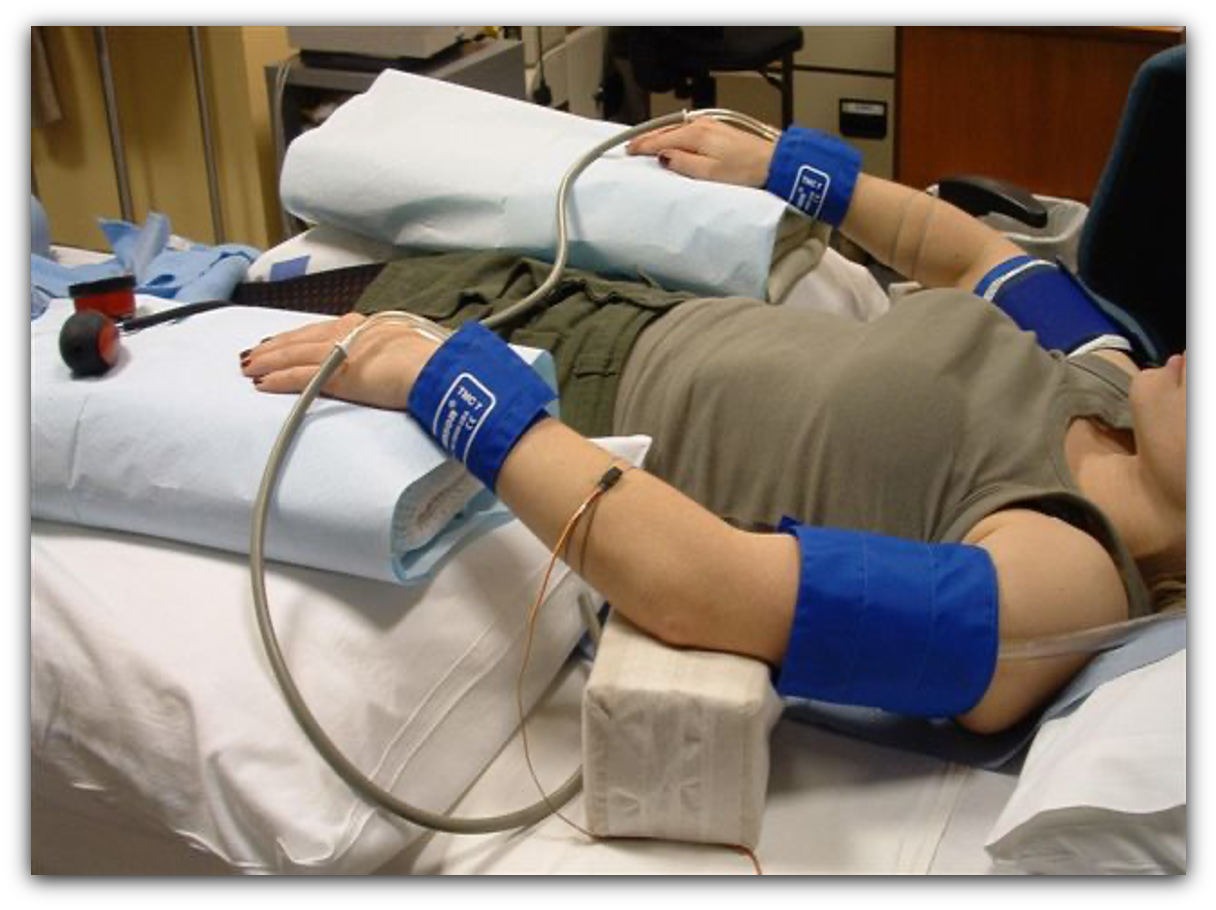
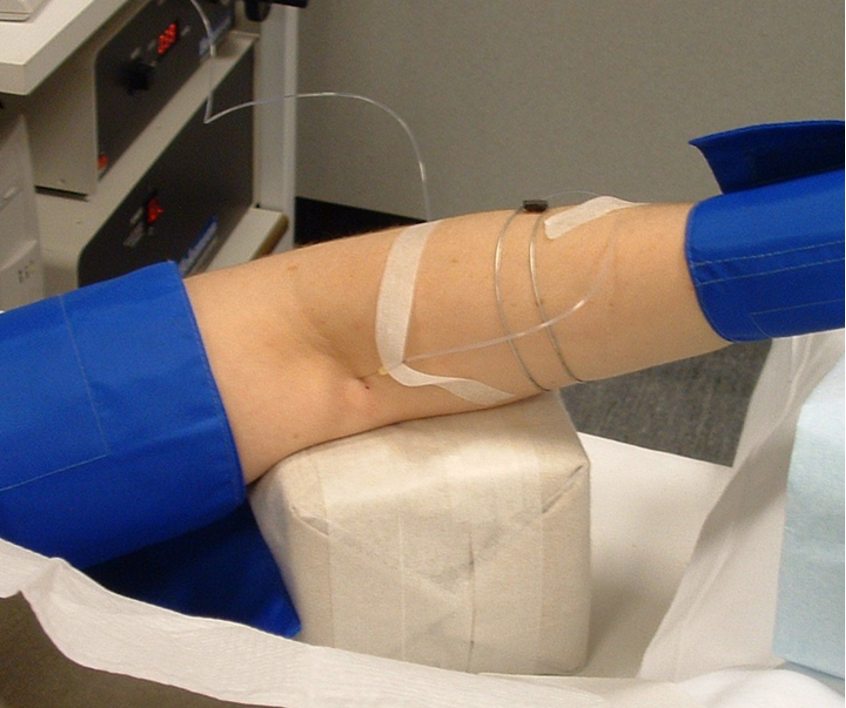
Venous-occlusion strain-gauge plethysmography for brachial-artery infusion studies of endothelium-dependent and -independent vasodilators.
A validated portfolio of vascular, haemodynamic and autonomic assessments delivered under Good Clinical Practice at Cambridge — supporting mechanistic Phase 1/2 trials, device validation and translational discovery.
The Cheriyan Group operates a comprehensive suite of research procedures spanning endothelial function, blood pressure phenotyping, vascular structure, and autonomic assessment. All procedures are performed by trained investigators using calibrated, research-grade equipment, with standardised protocols suitable for regulatory submissions and multi-centre studies.
Gold-standard and complementary techniques to interrogate nitric-oxide bioavailability, arterial wall behaviour and endothelium-dependent vasodilatation — the earliest measurable signs of vascular disease.
Venous-occlusion strain-gauge plethysmography for brachial-artery infusion studies of endothelium-dependent and -independent vasodilators.
Pulse wave analysis and carotid-femoral pulse wave velocity (SphygmoCor / Vicorder) as validated markers of central arterial stiffness and wave reflection.
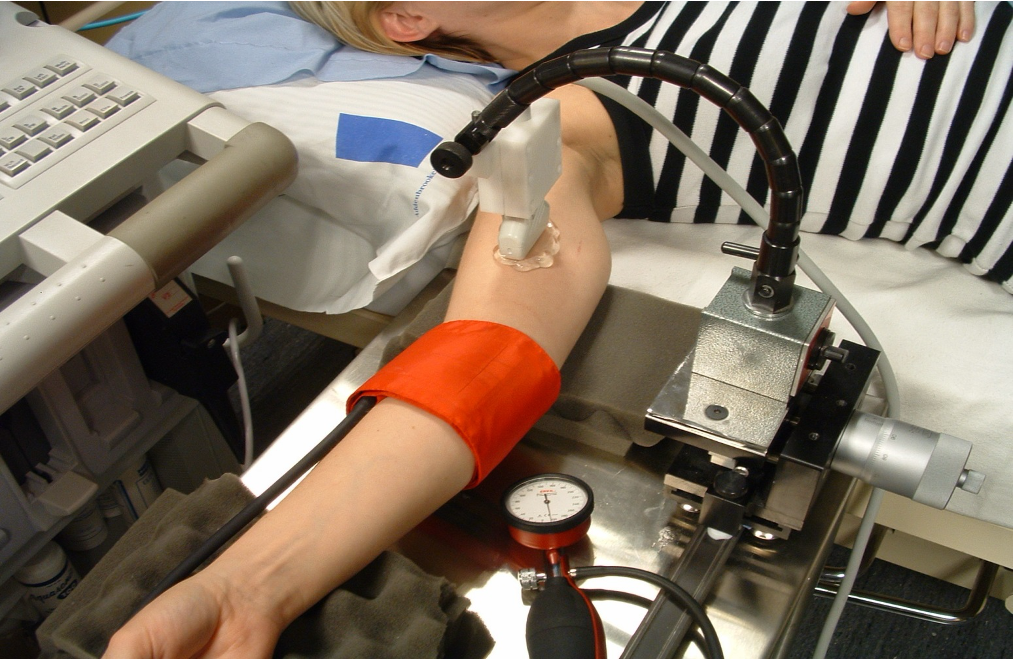
High-resolution brachial-artery ultrasound with automated edge-detection to quantify endothelium-dependent, NO-mediated vasodilatation.
Multi-modal, protocol-driven blood-pressure phenotyping for hypertension trials, device validation and clinical research — aligned with ESH, AHA and ISO 81060-2 recommendations.
Standardised clinic BP measurement under trained observation, following ESH/AHA positioning, cuff sizing and rest protocols.
Automated office BP (AOBP) with the participant seated alone, avoiding white-coat effect — the SPRINT-style research standard.
Ambulatory BP monitoring across day and night periods, with dipping analysis, morning surge and BP variability.
Head-to-head validation of wearable, optical and PPG-based cuffless BP devices against reference standards, in line with ISO 81060-3 / IEEE 1708.
Deep phenotyping of the peripheral and carotid vasculature — combining classical pharmacology with modern imaging.
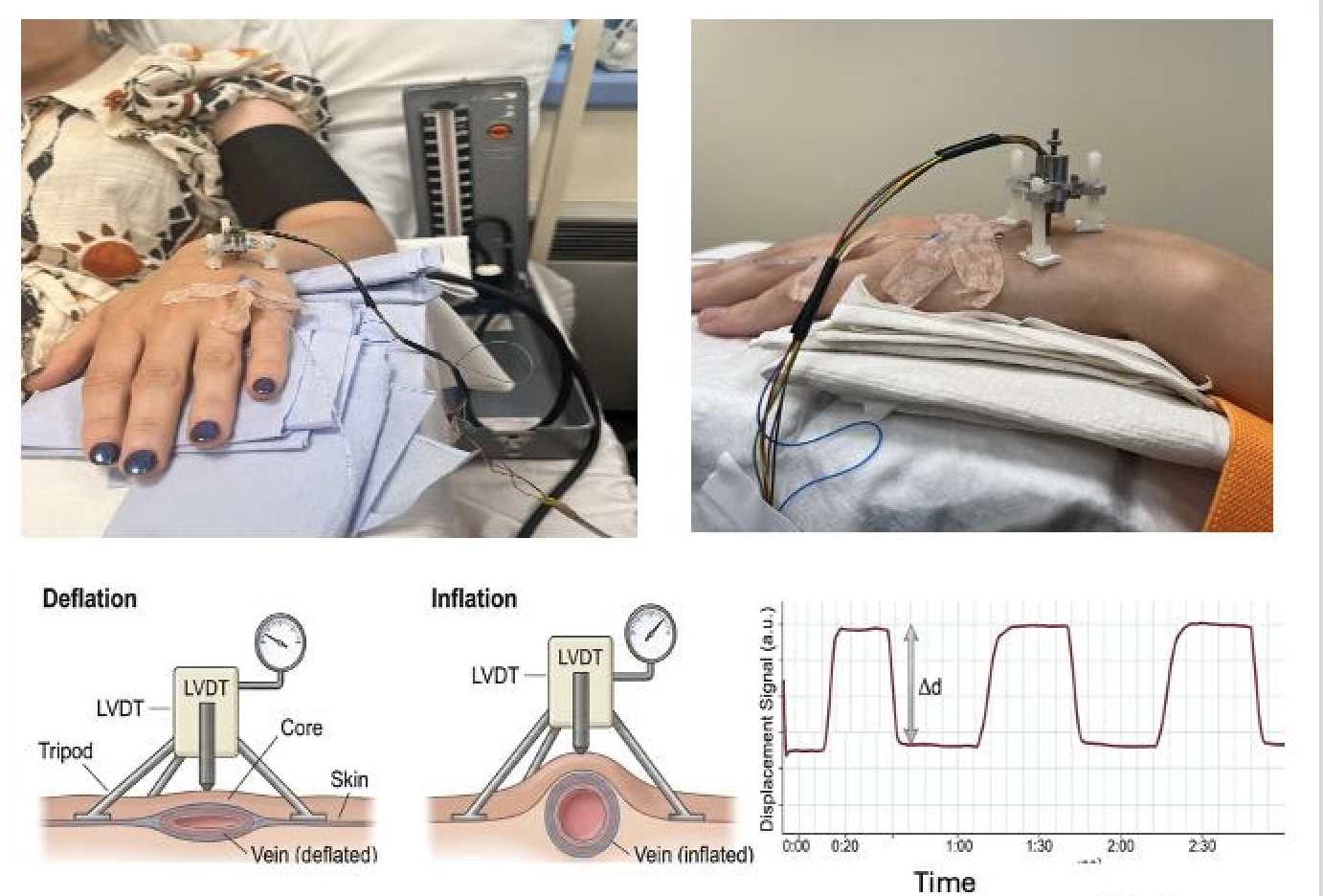
Dorsal hand vein compliance technique (Aellig) for local, first-in-human pharmacology of venoconstrictor and venodilator agents.
B-mode ultrasound of the common carotid artery with semi-automated intima-media thickness measurement, an accepted surrogate for atherosclerotic burden.
Non-invasive quantification of cardiac autonomic control — informing arrhythmia, heart-failure and metabolic-disease research.
Time-domain, frequency-domain and non-linear HRV analysis from short- and long-term ECG recordings, following the Task Force of the ESC/NASPE standards.
Continuous ambulatory ECG capture with real-time, cloud-based waveform review — enabling remote rhythm surveillance, rapid arrhythmia adjudication and low-friction integration into decentralised trials.
For sponsor, CRO or academic enquiries about incorporating Research Procedures into your protocol, please contact the Cambridge team.